



Caregiver FAQ and glossary
Caregivers face many questions, from daily responsibilities to complex medical terms. Quick answers and a glossary, so you can feel confident navigating the journey.

How do I know when to ask for help?
If you are feeling physically exhausted, emotionally overwhelmed, or unable to manage daily responsibilities, it is time to reach out. Ask friends or family to cover tasks, or explore respite care through hospice or home health services.
What should I bring to medical appointments?
A notebook, medication list, insurance information and prepared questions. Having a caregiver present helps patients remember details and feel supported.
How do I talk to children about pancreatic cancer?
Be honest but age-appropriate. Use clear language, encourage questions, and reassure them that their feelings are normal.
What if I feel guilty taking breaks?
Rest is necessary. Taking care of yourself allows you to provide better care for your loved one. Self-care is not selfish — it is essential.
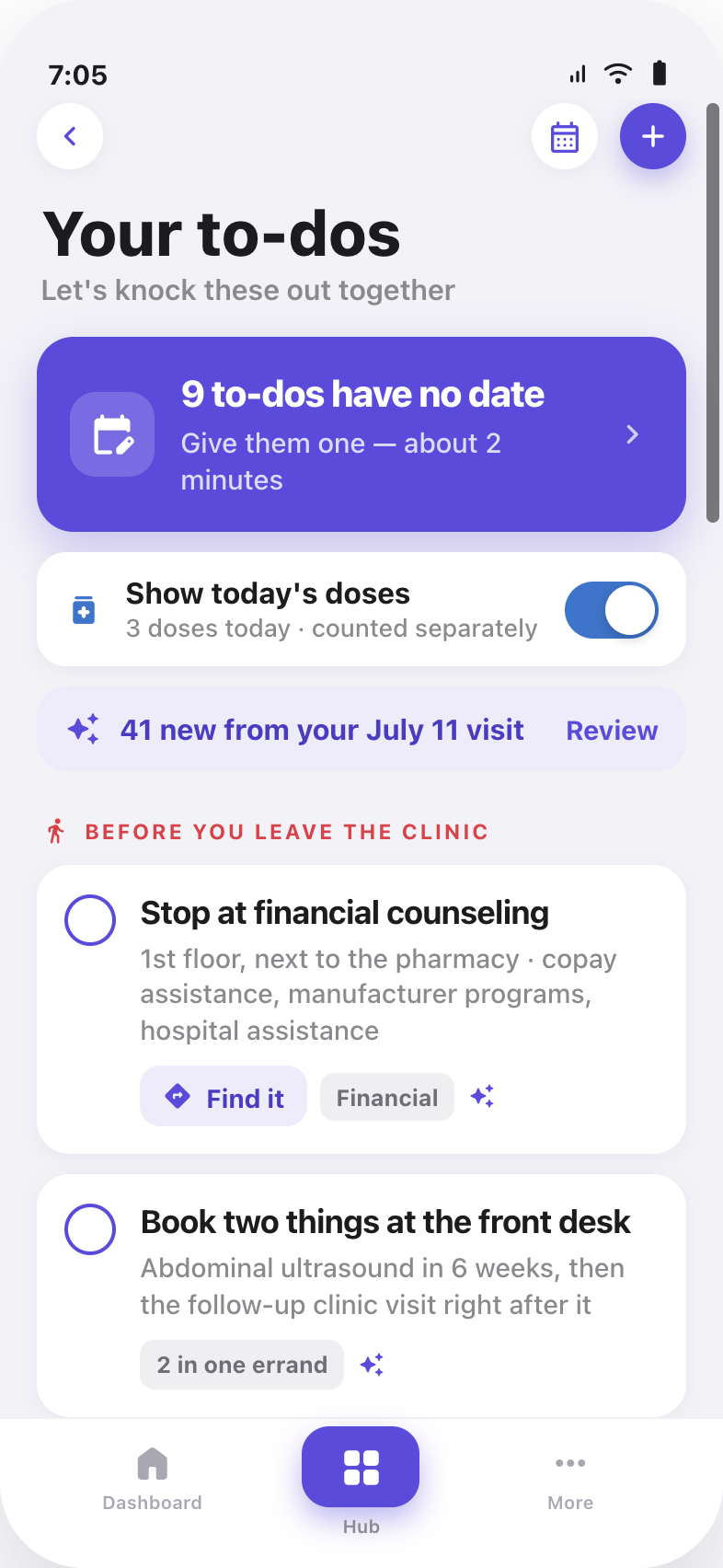
Where can I find financial assistance?
Ask your hospital’s financial counselor, or explore national programs.
SourcePatient Advocate Foundation → SourceCancer Financial Assistance Coalition →How do I connect with other caregivers?
Join Sky Foundation’s caregiver committees, or online platforms built for exactly this.
SourceCancer Support Community → SourceCaringBridge →Glossary of key terms
Key takeaway
Caregiving is filled with questions, and no one should feel lost or alone. Learning common terms, asking for help and connecting with supportive communities all make you a stronger advocate for your loved one.

Caregiver FAQ and glossary
Caregivers face many questions, from daily responsibilities to complex medical terms. Quick answers and a glossary, so you can feel confident navigating the journey.
How do I know when to ask for help?
If you are feeling physically exhausted, emotionally overwhelmed, or unable to manage daily responsibilities, it is time to reach out. Ask friends or family to cover tasks, or explore respite care through hospice or home health services.
What should I bring to medical appointments?
A notebook, medication list, insurance information and prepared questions. Having a caregiver present helps patients remember details and feel supported.
How do I talk to children about pancreatic cancer?
Be honest but age-appropriate. Use clear language, encourage questions, and reassure them that their feelings are normal.
What if I feel guilty taking breaks?
Rest is necessary. Taking care of yourself allows you to provide better care for your loved one. Self-care is not selfish — it is essential.
Where can I find financial assistance?
Ask your hospital’s financial counselor, or explore national programs.
How do I connect with other caregivers?
Join Sky Foundation’s caregiver committees, or online platforms built for exactly this.
Glossary of key terms
Key takeaway
Caregiving is filled with questions, and no one should feel lost or alone. Learning common terms, asking for help and connecting with supportive communities all make you a stronger advocate for your loved one.